
Is using plain speak your natural go-to in your professional interactions? Or do you find yourself utilizing mostly academic language?
I want to tackle the stronghold that overly academic language has in our profession as a whole. Instead, I’d like to emphasize using plain speak. Or as I like to call it, talking like a normal person.
I want to advocate for using plain speak in all of our interactions including our professional, and yes, academic ones.

I’m not saying we need to dumb ourselves down, or make ourselves seem less intelligent than we are. But, when we are trying to communicate with people, it’s much more effective if we speak in the same terms that are most broadly understood while still being clear, accurate, and articulate.
If you’re like me and you caught the bad habit of using overly academic language I want to offer some tips to help you overcome that practice.
If you’d rather watch than read, check out the video version of the article below:
What is plain speak?
Plain speak can mean different things in different contexts. In some contexts people use it to mean to speak frankly about what’s on your mind without filtering it or trying to be polite or PC.
I’m not necessarily referring to that definition because that can start to trend towards being less professional. Rather, I’m talking about removing the overly academic language from your interactions. This would include speaking with your clients, how you write about yourself online, and your interaction with fellow therapists.
And yes, even if you are a professor, I would advocate for using plain speak and language that people tend to use in their day-to-day interactions.
We want to eliminate using those giant words. The words that make you sound really smart but make it really difficult for people to understand what you’re saying.
Academize takes me back to my middle or high school days when I thought that adding big words from the thesaurus would make a book report sound smarter.
I think Michael Scott from The Office is an excellent, humorous example of this idea of reaching for big words in order to sound smarter. Except, comically, Michael Scott always mixes up his words. And shows that he doesn’t really know what he’s talking about.

4 reasons to use plain speak as a therapist
Let’s dive into the official reasons why I think it’s important to lean into using plain speak, even in all of our professional interactions, as a therapist.
1) Builds trust with clients (and everyone)
The first reason is because it helps build trust with potential clients, existing clients, and potential referral sources.

Overuse of academic language does not equate to untrustworthiness. However, overuse of academic language can make it more difficult for somebody to build trust with you.
Let’s imagine that I was a potential client looking for a therapist and reading online therapist profiles. What if I found a therapist profile that was using overly academic language? Would I see all that terminology and think I found a safe place to land and a person who’s going to help me? Or, would I see all the jargon, that I potentially don’t understand, and not really know how this person is going to help me? And not feel seen in my problems?
2) Leans into authenticity
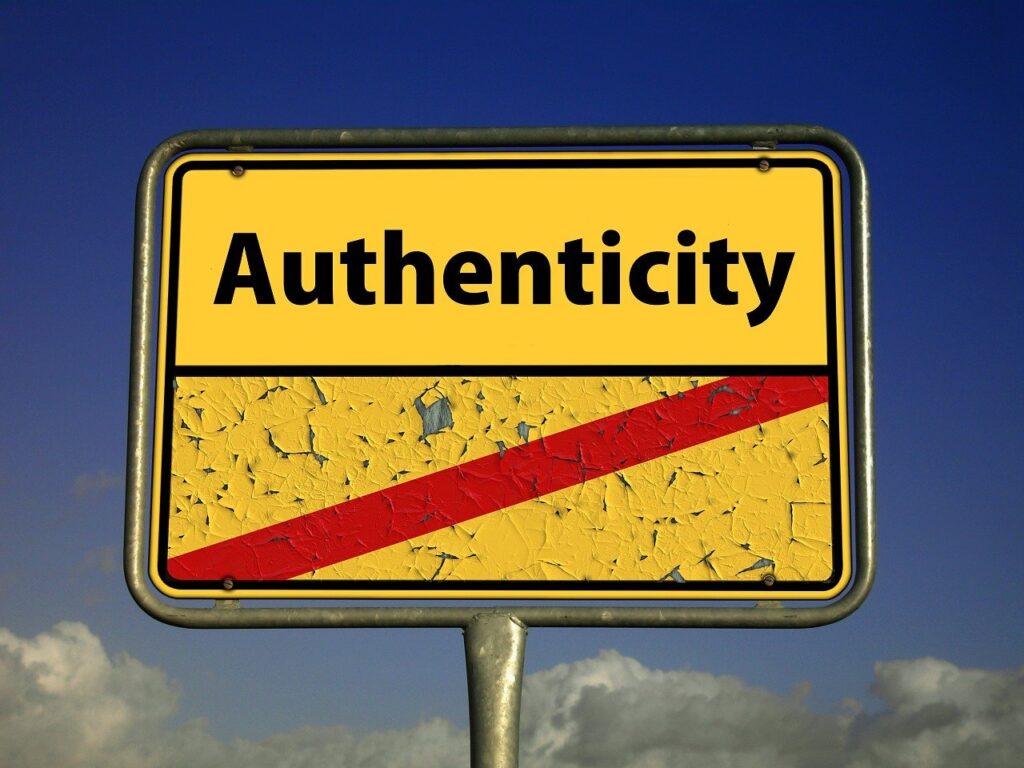
The next reason I advocate for using plain speak as a therapist is because I think it’s good to lean into authenticity.
If it’s very authentic for you to use very academic language, then I think you’re a good candidate to keep being that way! But, I think that a lot of times people who use overly academic language in their professional lives are not usually using overly academic language in their personal lives.
I think it’s much more beneficial to our clients for us to be as authentic as we can while remaining professional. And I also think it’s supportive to our well-being as therapists. I believe it wears on us if we feel like we’re living a double life where we have it together with our clients, but in the rest of our life we’re falling apart.
So if there are any ways we can appropriately lean into authenticity as a therapist I think that’s also going to benefit our own well-being.
3) Helps with marketing
Practically, using plain speak instead of academic language can be helpful from a marketing perspective when it comes to SEO.
If you aren’t familiar with SEO, I have a whole series of videos that defines SEO and explains how you can use it for marketing.
But, basically, you want potential clients to find you when they are doing a Google or GPT search. Your potential clients will use plain speak in their search because that’s how people talk.
So if you’re using plain speak on your marketing materials then it’s much more likely that those words will line up with what folks are looking for when they’re searching for a therapist.
4) Academic language can be ostracizing
I believe that overly academic language can be ostracizing. It’s especially common in career paths that require a significant amount of academic training.
Folks sometimes confuse academic language with professionalism. And, to me, those two things live on completely separate planes. Personally, I think professionalism is about being responsible, keeping healthy boundaries and staying focused on prioritizing what’s in your clients best interest. What words you’re using to do that has almost nothing to do with how you accomplish those goals.
In my opinion, overuse of academic language can start to ostracize clients, or even fellow therapists. It can also be unhelpful in supervisor/supervisee or professor/student relationships. We can start to ostracize the people that we are speaking to simply by demonstrating that there are words we know that they may not.
In a lot of contexts, folks may be in positions of teaching, training, supervising, or coaching. These are scenarios where it’s super important to use language that makes sense for the people that we’re talking to.
3 tips to reduce use of academic language
So now that I’ve made a case for why I think it’s a good idea to minimize overly academic language in our professional lives, I want to share some tips on how to make that pivot.
Tip #1: Practice listening to yourself
The first tip is useful on so many practical levels. Not just for reducing the use of academic language, but just improving your communication skills overall.
Read aloud whatever marketing materials you have, whether it’s an online profile, website, or emails you may be sending out to potential referral sources. Pull out your phone and record a voice memo of it. Then listen to it back and ask: Does that sound like me? Is that what I sound like?

Tip #2: Enlist non-therapist help
My next tip is to bring in a friend. Specifically, a non-therapist friend. It could be a loved one that knows you quite well.
Ask them to listen back to the voice memo you created and ask them if they think it sounds like you. Is that what you normally sound like? They will know!
If your friend or loved one points out that it doesn’t quite sound like you, no need to be offended. It’s very, very common for that to be the case. (That’s why I’m writing this article!) Just take it in stride and try to make your writing sound more like you.
Once they’ve flagged a few spots that stood out to them, see if you can work on the wording a bit. And then try presenting it to a different non-therapist friend. Iron out the edges. See what sorts of snags are coming up that people get confused by.
Tip #3: Explain it like I’m five
This tip comes from a subreddit I like: Explainlikeimfive. Now, you don’t have to speak like someone is a 5-year-old, but it’s good to keep in mind that the average reading level in the US is a 7th or 8th grade level.
So, I think there’s wisdom in making all your marketing materials at about a 5th grade reading level. This is going to make what you put out there more accessible to more people. Fortunately, with AI there are a lot of tools that can help you understand what reading level your writing is at. Some of the tools can even modify your writing so it’s at the appropriate reading level.
You could take your entire “About Me” section of your website, or your Psychology Today profile and ask the AI tool to help you write it at a 5th grade reading level. After looking at what modifications were made to your language, make changes yourself in your own words. Make it sound like you.
Closing thoughts
Remember, stepping away from academic language doesn’t mean that we need to step away from professionalism. I think professionalism has little or nothing to do with what kind of vocabulary we are using. Instead, it has everything to do with the kind of person that we are.
Want website help?
If you are currently trying to put together your own website and need help in writing website copy and attracting potential clients, I have an eCourse just for you! Check out the course Website Copy in a Weekend.
Feeling overwhelmed about writing copy for your website? Read my article all about website content creation for how to overcome some of your website creation fears.
You might also find it helpful to hear me give feedback on real therapists websites to see where I suggest making changes to academic language, ease of navigation, clarity of purpose, etc.
Until next time, from one therapist to another: I wish you well!
-Marie
Photo by SHVETS production on Pexels
Photograph by Alex Green on Pexels
Image by Gerd Altmann from Pixabay
Photo by Tima Miroshnichenko on Pexels
Leave A Reply