
The internet is just full of misinformation about mental health right now. Especially on social media. Have you noticed that too?
Believe it or not, despite my presence online, I barely use social media.
Up until I sat down to prepare for this article and video I didn’t have TikTok. I only log onto Instagram to post polls for my YouTube episodes. Even on YouTube, I have my watch history turned off.
Between all the types of social media, I don’t scroll.
The rise of misinformation
So I’m clearly not the expert on what’s happening on social media. However, I’ve noticed over the last couple of years that my clients have increasingly cited completely inaccurate mental health information. They usually state it pretty confidently like they believe it is factual.
When I get to digging into where they learned something I often hear things like, “It’s common knowledge,” or, “it’s everywhere.” And it’s only with more poking that we get to the point of, “I heard it on TikTok. Everyone’s talking about it.”
I’m seeing this happen more with my friends as well and even fellow therapists.
Some of the misinformation about mental health is a little more innocent. Like misusing terminology by using a term in a different way then it actually means. But, I’m seeing more and more clients self-diagnosing themselves with significant mental health diagnoses. Often these are diagnoses that I don’t see any evidence for.
Unfortunately, we now have evidence to support that most of the mental health information that is available on Tik Tok is misleading or inaccurate in some form.
Prefer to watch instead? Check out the video version of this article below:
Misinformation is more engaging
Before we dive in further, I want to make something clear. I’m not bashing the presence of mental health information on social media. I would love it if information was free, abundant and accessible! However, the issue I’m taking here is about how much misinformation about mental health is out there.
The 2024 July issue of the APA’s Monitor on Psychology highlighted this issue of mental health misinformation. Their cover story was called “How to reverse the alarming trend of health misinformation“.
In this article they say, “Research indicates that people tend to share and engage more with false or low-quality information they encounter online, compared with factual information.” (Allen, J., Integrity Institute, October 13, 2022; Vosoughi, S., et al., Science, Vol. 359, No. 6380, 2018)
They go onto say, “That’s likely because it’s designed to be engaging and often has an emotional pull. Social media companies have little incentive to police content if it means removing users and advertising dollars from their bottom line.”
This seems to get to the source of the issue. Because, if we were spreading genuine factual information about mental well-being it would be quite boring. It would be quite nuanced. It wouldn’t be click-baity.
The stuff that’s getting attention on social media is the stuff that really grabs at your emotions. Which oftentimes is inaccurate information.
Let’s look at the numbers
You may be wondering: how much of the stuff on social media is inaccurate?
PlushCare did an original survey in 2022, which they have updated as of June 2025. They released their findings in the article “How Accurate is Mental Health Advice on TikTok?”
They found that, “…“during the coronavirus pandemic, when professional services halted and people turned online to seek support, socialize and share updates about their lives, the number of social media posts that mentioned “mental health” grew by 80.53%.”
This makes sense. Many of us turned to social media because not only was our mental health strained but we also couldn’t access our normal social supports in the same way we had been.
The article goes on to say, ““While creating content around mental health can help reduce the associated prejudices, it also has downsides, such as self-diagnosing and preventing people from seeking further help. And of course, not all content on social media is accurate, and consuming misinformation can be potentially harmful.”
This quote sums up how I feel about how people are approaching mental health on social media. I think it’s fantastic that people are talking openly online about mental health. And yet, the information that’s out there is largely inaccurate. So now we have people potentially self-diagnosing from things they learned on social media. They may be giving themselves an inaccurate diagnosis.
Key takeaways
Some of the key takeaways that they found in this survey are:
- “83.7% of mental health advice on TikTok is misleading. While 14.2% of videos include content that could be potentially damaging.”
- “100% of the content for ADHD contained misleading information, the most of any condition in our analysis.”
- Content covering bipolar disorder (94.1% of videos) and depression (90.3% of videos) were also found to be highly misleading.
- “While experts concluded that 54% of advice contained accurate information, 31% of videos contained inaccurate information.”
- “Only 9% of TikTokers advising on the platform had a relevant qualification, with the remaining 91% lacking the medical training to support those with challenges.”
4 mental health myths on social media
To gather more information, I asked my instagram followers to share some of the biggest mental health myths they see on social media.
1) Narcissism
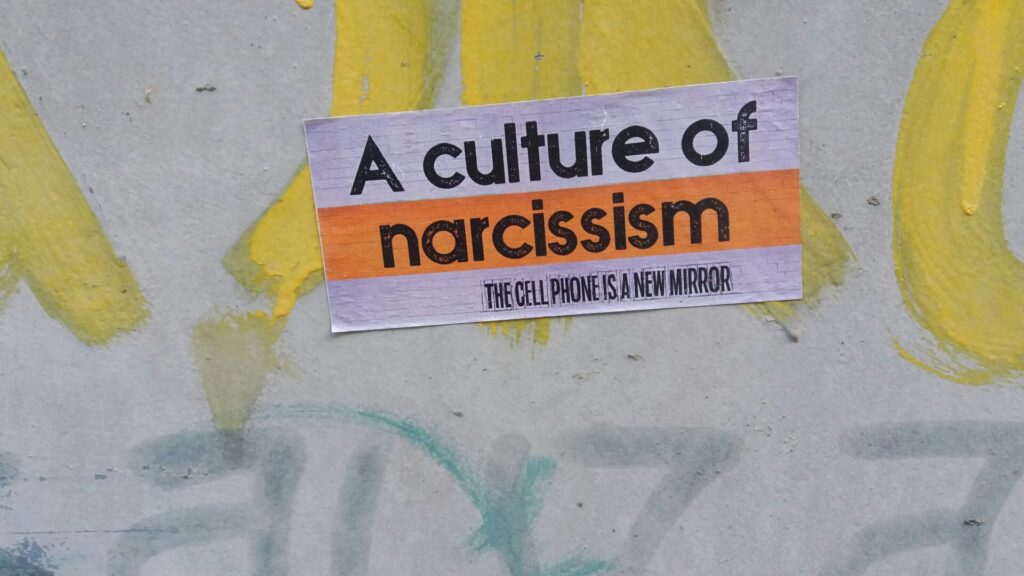
There were some definite themes in the responses I received. Of the 15 people that responded, 5 shared something in the category I’m calling: “Everyone is a narcissist”. One said a myth they see perpetuated on social media is: “It’s becoming trendy to call people narcissists if they’re self-centered or mean”.
I have a lot of mixed feelings about this. I’ve shared on another YouTube video about how I have a lot of narcissistic traits. Arguably, if you put yourself out there on social media regularly you have to have some amount of narcissism.
Narcissism is everywhere in the sense that many folks in positions of power skew towards narcissism. So I think we need to be talking about this. However, sometimes the pendulum can swing too far in trying to overcorrect. In an attempt to call out people who are doing harmful things we may be overusing this term.
2) Overpathologizing normal experiences
The next theme I noticed in the survey responses was overpathologizing normal experiences. One responder said, “Idk if it’s a myth, but lack of nuance and pathologizing the normal range of being human.”
I’ve noticed some of my clients labeling any bit of discomfort as a pathology. Sometimes clients will equate being sad with being depressed, or worrying with having a panic attack.
I think this is part of the pendulum swinging the other way. Folks are now overcompensating for living so long in a world where if an individual was going through a clinically concerning situation the mental health stigma completely disregarded what was truly a clinical concern.
It’s great that we are now talking about these clinical concerns and pathologies and normalizing them.
But, I wonder if overlabeling certain experiences as pathologies is a way of overcompensating? If someone wants others to believe that their sadness is real, they might choose to use the word “depressed”. Even if they don’t meet the clinical criteria for depression, using this term may make them feel validated in an experience which historically has been completely disregarded.
But, someone who uses the word “depressed” to explain their appropriate response of sadness to a situation might make another person who does meet the criteria for clinical depression feel invalidated. Or a clinically depressed individual may call into work and say “I can’t come to work today, I’m really depressed” and not be believed because their manager may think they are just feeling sad.
3) Responding to clients overpathologizing
I don’t correct my clients when they come in and say something like,“I had this traumatic experience” and the event wasn’t clinically traumatic. Instead, I try to seek to understand. I might ask, “What does that mean to you?”
But, outside of the therapy office, I do think it’s really important that we start to correct what these terms mean so we can help people be more educated about them.
4) Misusing terms
The next mini theme that popped up from the survey responses was the misuse of terminology. One of my responders gave an example, “Trauma bonding! It’s not a way to connect, it’s an abuse dynamic.”
The way people use this colloquially is to refer to when people share about their traumas with each other and find connection through doing so.
But, trauma bonding actually refers to a dynamic where someone who is going through trauma overly connects and identifies with their abuser.
There are so many terms like this that people are misusing but clinically the term means something else.
What can we do?
When reading articles like this blog post which present information that sounds a lot like doom and gloom it can be easy to walk away feeling discouraged and helpless. You may be thinking: what can we do?
I found an article published in the bacp journal. The article is titled, “The big issue: Mental health and the TikTok effect”.
The author, Joe Martin, provides some ideas of what to do about the misinformation about mental health on social media.
He quotes a doctor, Dr. Rettew, who gives some advice for when a client brings misinformation into a session. He says, “gather more information while being both supportive and validating, and at the same time holding a little scepticism about taking everything we hear at face value. We may find out for one youth that the DID symptoms really never were part of that person’s life before watching TikTok but that underlying the elaborate presentation are genuine feelings of anxiety and identity disturbance. For another person, maybe we find out that the DID symptoms have been present all along and it took TikTok to make the person feel safe enough to express them more openly.”
Personally, I think this is a great approach to take with our individual clients when they’re presenting information. Be skeptical about what they’re saying but also invest in it a little bit. Could it be that they genuinely discovered something accurate about themselves?
Let that option be available while also gently and curiously inviting them to share more about their self-diagnosis or a bit of misinformation. There is something important and valid going on for them within what they are sharing. Even if the terminology or label isn’t quite accurate.
Using statistics with clients
If I have a client that shares misinformation that they found on social media more than once, and I have a rapport built up with them, I share statistics about misinformation on social media with them. Like the articles and statistics that I shared in this article.
I may say something like: “We have research showing that the majority of mental health related information on TikTok has some level of misleading information. Some of it can even be harmful. Can we keep that in mind while we talk about what you’re bringing up?”
Promote accurate information
On a larger scale than our one-on-one therapy work there is so much we can do. I would love it if we would lean in more.
The APA published an article in November 2024 titled, “Addressing misinformation about mental health with patients”. In this article they share different ways that therapists can respond to this issue.
“One antidote is for psychologists to position themselves more deliberately as co-editors and advisers for authors and creators sharing research-backed messages around mental health.” (Abrams, 2024)
The author quotes Lorenzo-Luaces as saying, “ ‘The fact that influencers are so vocal means that the rest of us have an obligation to get good information out there. As psychologists, it’s important to think about whether we have an obligation to disseminate real information in areas where we have expertise.’”
We have a real opportunity to step out there and provide some accurate information about health. Of course, our presence on social media is not a replacement for therapy.
But, we can correct the misinformation that we hear, and we can point folks to accurate sources of information. Hopefully this will help counter balance the information that’s getting perpetuated that might not be helping people.
Systemic changes needed
I know I’m highlighting social media in this article, but if we go back to where we started, all the misinformation is happening on social media because there’s not enough accurate information readily available. There’s not enough support or resources or access to mental health care.
I would love to see a much broader systemic change where folks in the media and positions of leadership would talk about mental health more frequently and in a destigmatizing way.
And, when they do present information they take the time to consult with a qualified professional to make sure whatever information they’re sharing is accurate.
How to use social media in beneficial ways
After taking a look at how social media can spread misinformation about mental health, it’s good to point out that it can be used for a lot of good!
In fact, it can help potential clients find you. Watch my video on how to use social media to get more counseling clients.
Social media can also be a helpful tool for professional networking. Check out my article all about how to find colleagues that you get along with.
And until next time, from one therapist to another: I wish you well!
-Marie
Photo by Solen Feyissa on Unsplash
Photograph by Marija Zaric on Unsplash
Image by Jorge Urosa on Pexels
Photo by Brett Jordan on Unsplash
Leave A Reply